

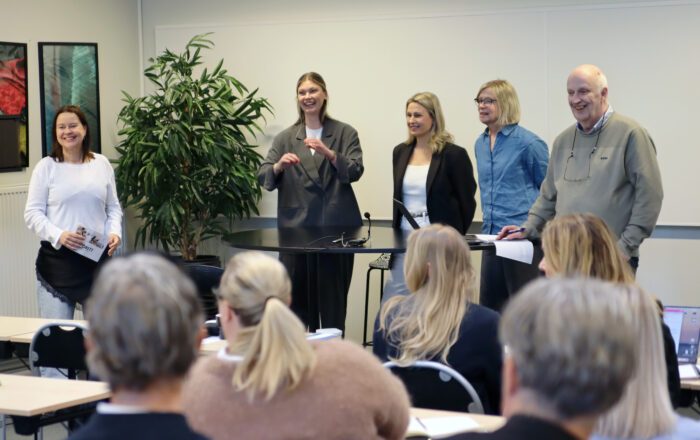
At the network meeting, one question took centre stage: how is the footwear industry responding to the systemic shift that circularity and new EU requirements demand? The day offered concrete insights, engaged discussions and a clear picture of what is needed for the industry to meet the challenges ahead.
A systemic shift – not a gradual improvement The message from the network meeting was clear: the footwear industry faces a fundamental systemic shift. The future of product development is not about making shoes “slightly more sustainable” – but about designing for circularity from the outset, building effective take-back and recycling systems, and adapting business models accordingly.
Small parcels and unfair competition One of the most discussed topics of the year was the private import of low-cost products under 150 euros – up to 98.5% originating from China – operating entirely outside EU regulations. This leads to unfair competition, inadequate chemical controls and increased overconsumption.
Circularity requires the right design A key insight: the problem is not the materials – but that shoes today are designed for waste, not recycling. The solution requires fewer materials, design for disassembly and alignment with recycling systems. Meanwhile, a reuse project showed that as many as 75% of collected shoes still have remaining value.
Sweden can take a leading role
With its strong design tradition, innovative capacity and well-developed collaboration between industry and research, Sweden is well positioned to become a testing ground for circular systems in footwear.
The way forward
The meeting highlighted several priority areas: stronger supplier control, implementation of digital product passports, circular design principles and more active participation in EU policy work – where the footwear industry currently lacks a sufficiently strong voice.
Are you active in the footwear industry and looking to strengthen your sustainability work? Through SSEI you gain access to up-to-date knowledge on EU requirements, an engaged industry network and practical tools for more sustainable business.
Learn more at ssei.se or contact linda.ekstrom@tradepartnerssweden.se for more information.